CARTO vs Mapbox
Looking for an alternative to Mapbox?
Build maps, analysis, and AI Agents natively in your cloud data warehouse, with nothing to upload, copy, or keep in sync.

Fully cloud native
Connect directly to your data warehouse and deploy on-demand spatial applications, with all data stored within your existing cloud data infrastructure.

Cost effective tiling
CARTO is a powerful solution to visualize & analyze geospatial data at scale. Render massive amounts of spatial data efficiently, and cost effectively.

Scalable development
Create map tiles using native data warehouse resources with no limits on scalability. Build performant spatial applications using any JavaScript framework.


CARTO vs Mapbox at a glance

The Agentic GIS platform: AI Agents, workflows and maps built directly in your cloud data warehouse.

Maps, navigation and location APIs for app developers, automakers and logistics.
CARTO
Teams analyzing and mapping their own large datasets in the warehouse: analysts, data scientists, app developers and business users.
Mapbox
Consumer and automotive apps that need turn-by-turn navigation, mobile SDKs and custom basemaps.
Architecture and governance
CARTO
Cloud-native: every query, map and AI Agent runs inside your own data warehouse. No copies, no syncing: maps always reflect your latest data, and access stays under your existing warehouse permissions and audit controls.
Mapbox
Hosted SaaS, so your data moves out of your warehouse and into Mapbox before it can be mapped. Every upload is a copy to secure, govern and refresh, and maps go stale between uploads. Self-hosting means a separate product (Mapbox Atlas) and licence.
CARTO
Agents authenticate as the user and inherit their warehouse permissions. Every action is logged and auditable inside your cloud's existing controls.
Mapbox
Access-token-based API security. No equivalent to warehouse-level governance of your own data.
CARTO
Connects directly to BigQuery, Snowflake, Databricks, Redshift, Oracle and PostgreSQL. Queries run natively in your warehouse, and no data is stored in CARTO.
Mapbox
No direct warehouse connection for mapping: data has to be uploaded to Mapbox as line-delimited GeoJSON before it can be tiled. A Snowflake Native App brings Mapbox geocoding, boundaries and isochrones into Snowflake SQL.
CARTO
SaaS or self-hosted (Docker Compose or Kubernetes), available through the main cloud marketplaces.
Mapbox
Hosted by Mapbox for most services. Mapbox Atlas offers self-hosted maps (tilesets on S3-compatible storage), with search and navigation add-ons on Docker Compose or Kubernetes. Custom styles are still designed in Mapbox Studio on mapbox.com.
CARTO
Your data stays in your warehouse and tilesets are tables you own. Built on open standards (deck.gl, MCP, Agent Skills) and works with any AI model.
Mapbox
Data and tilesets live in Mapbox-hosted services, and maps depend on the proprietary GL JS licence.
AI Agents
CARTO
CARTO AI Agents inside Builder maps for governed analysis on your own warehouse data. For custom deck.gl apps, the open-source agentic-deckgl library adds chat-with-map, with model access through CARTO AI.
Mapbox
A Mapbox MCP Server gives AI agents Mapbox location services (geocoding, routing, isochrones), plus a "location agent" demo that controls a GL JS map. No agent analysis of your own enterprise data.
CARTO
CARTO for Agents brings the platform into Claude, ChatGPT, Gemini, Microsoft Copilot and Snowflake Cortex, and into coding agents (Claude Code, Cursor, Codex) through the MCP Server, CARTO CLI and Agent Skills.
Mapbox
The MCP Server and DevKit MCP Server work with Claude, Cursor, VS Code and Codex, focused on location APIs and building Mapbox map styles.
Data and analysis
CARTO
Data Observatory: 12,000+ public and premium datasets (demographics, POIs, mobility, boundaries, financial and more), joined to your data inside the warehouse.
Mapbox
Its own location datasets: boundaries, traffic and movement data, and POIs through its search APIs.
CARTO
Native spatial SQL in the warehouse through the Analytics Toolbox, no-code Workflows, and AI Agents that run analysis on your own data.
Mapbox
Routing, isochrones, travel-time matrices and geocoding through APIs, plus basic client-side operations (distance, buffers, point-in-polygon) through Turf.js and its MCP server. No analysis engine for your own data at warehouse scale.
Building apps
CARTO
Built on deck.gl, the open-source (MIT) visualization library. CARTO is a principal contributor and sits on its technical steering committee.
Mapbox
Mapbox GL JS, under a proprietary licence since v2 (no longer open source). MapLibre is the open-source fork of v1.
CARTO
Works with any JavaScript framework (React, Angular, Vue) or vanilla JS/TypeScript through deck.gl and the CARTO APIs.
Mapbox
Works with React, Angular, Vue, Ember and vanilla JS.
CARTO
CARTO Basemaps (raster and vector, including Positron, Dark Matter and Voyager) with free non-commercial use and a commercial plan. Works with deck.gl, MapLibre and other renderers.
Mapbox
Mapbox Streets, Satellite and custom styles designed in Mapbox Studio. Free tier, then usage-based pricing on map loads.
CARTO
One API layer across the platform, the same one used by the CARTO CLI and MCP Server.
Mapbox
Separate APIs per product (maps, tiling, search, navigation).
Map tiling
CARTO
Build tilesets inside your warehouse with SQL or Workflows, including vector tiles.
Mapbox
Upload data to the Mapbox Tiling Service and publish tilesets through the API or CLI (or tile locally with Tippecanoe).
CARTO
Tiles generated on demand from a SQL query against your warehouse, so maps reflect live, filtered data without the need for pre-processing.
Mapbox
No hosted dynamic tiling from your own data. Tilesets are published as batch jobs (with incremental updates); on-the-fly tiles need a self-managed tile server.
CARTO
Static or dynamic tiles straight from H3 or Quadbin data, with automatic aggregation as you zoom.
Mapbox
No native Spatial-Index tiling. H3 data has to be converted to geometries and uploaded first.
CARTO
Tilesets scale with your warehouse. Very large geometries are handled with feature dropping and per-tile size controls.
Mapbox
Up to 20 GB per source file and 50 GB per tileset source (10 files). Tiles default to 1,250 KB per layer (up to 2,500 KB configurable); features over the limit are dropped.
CARTO
Scales with your warehouse. Current examples in production with datasets of 2.7 billion points.
Mapbox
Not applicable: no hosted dynamic tiling.
CARTO
Tilesets are built with your own warehouse compute and stored as tables in your warehouse, with no separate tiling service or per-tileset hosting fee. Creating and viewing them draws on your CARTO plan's usage quota, like any other platform activity.
Mapbox
Billed separately: processing per megabyte and per compute unit for every publishing job, plus hosting per tileset per day beyond the free tier.
Get inspired by our customers

With CARTO's AI Agents, predictive growth insights move beyond data analysts and into the hands of every decision-maker. Now, anyone can ask our data questions like 'Which neighborhoods will grow fastest?' and get instant answers - speeding up site planning and providing a real competitive edge.


CARTO is very cloud-driven which is ideal for us as we are able to easily leverage our data in Snowflake. The connection allows us to streamline our ways of working with geospatial data in an unprecedented fashion, bringing us more productivity, capability and scalability.

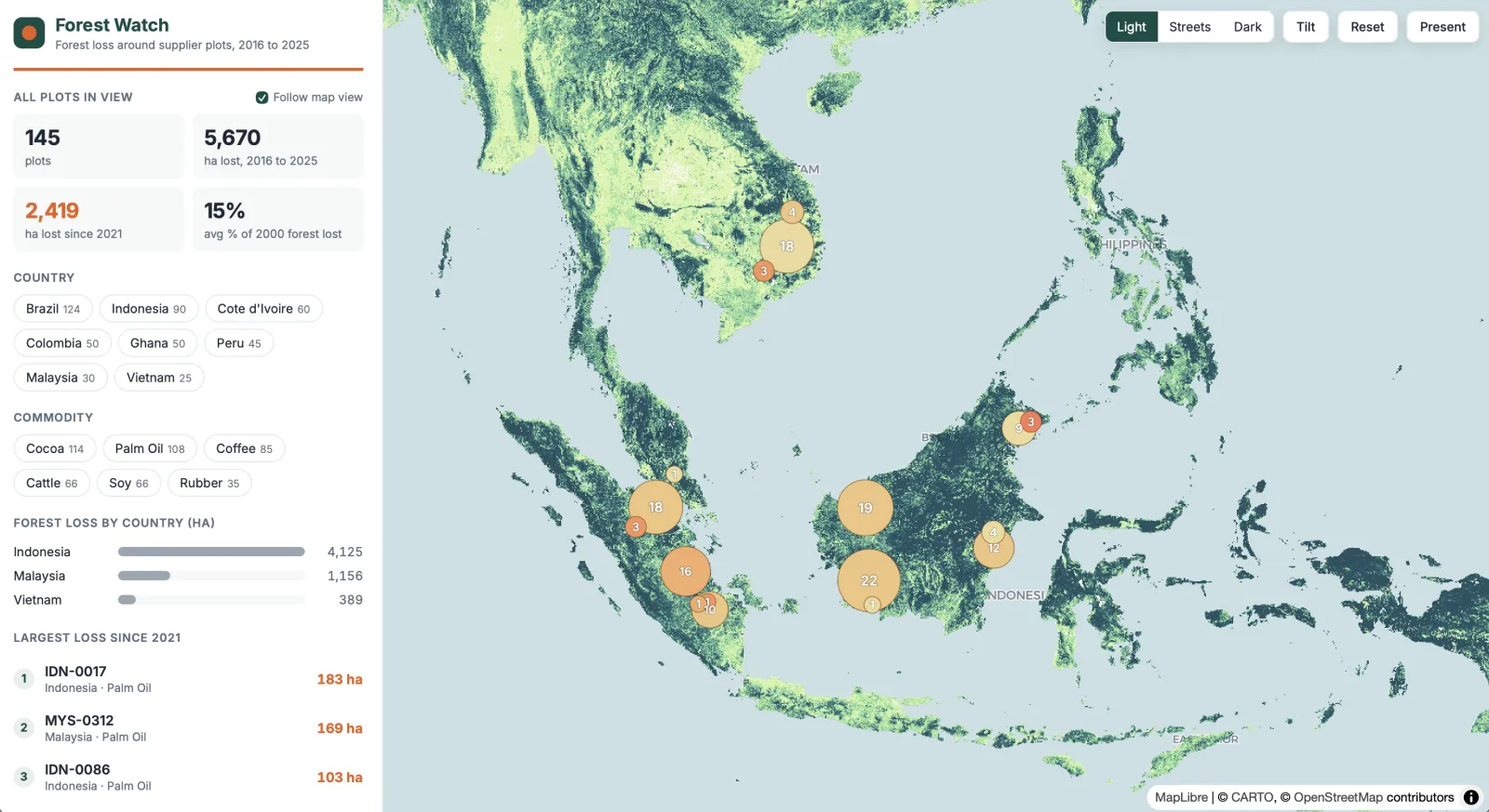
Maps that render straight from your data
Tilesets go stale the moment your data changes. With dynamic tiling, CARTO builds tiles from a query on your warehouse, so every map shows the latest data with nothing to rebuild or upload.

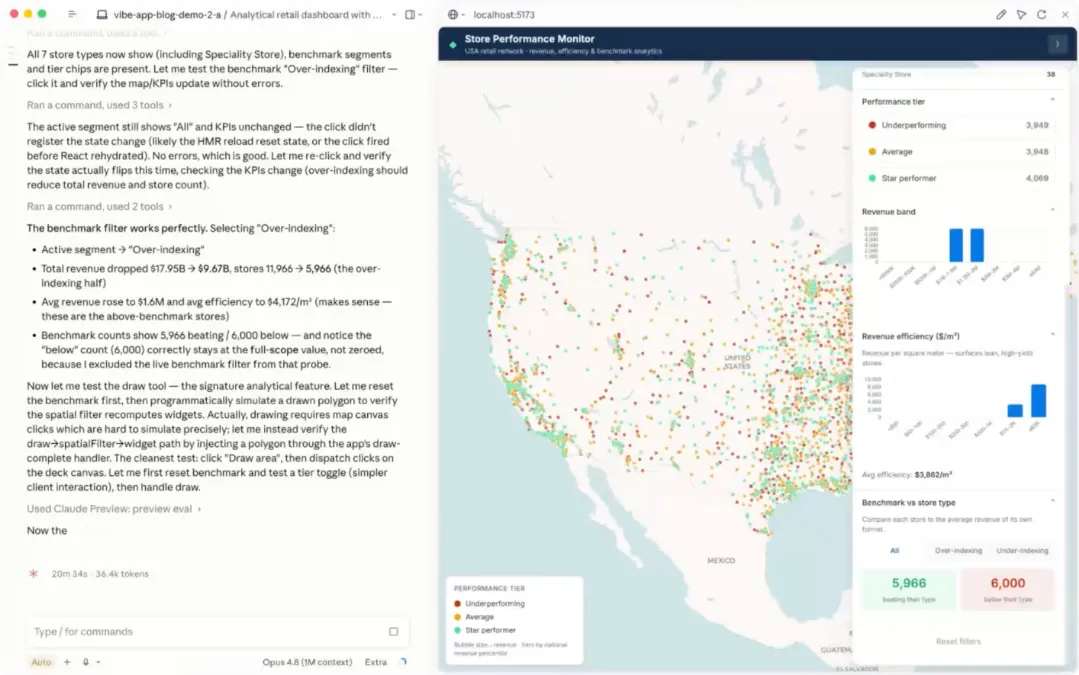
Add AI chat to your maps
Most people who need the answer can't write SQL or run desktop GIS tools. Add a CARTO AI Agent to a Builder map, or build chat-with-map into a custom app with agentic-deckgl, so users can ask questions in plain language.
Enrich with data already in your cloud
Finding, licensing, and loading boundaries, demographics, and points of interest takes weeks. The Data Observatory delivers public and premium datasets straight into your warehouse, ready to join.


Frequently asked questions
Yes. CARTO connects directly to BigQuery, Snowflake, Databricks, Redshift, Oracle and PostgreSQL. Maps are built from a table or a SQL query and tiled on demand with dynamic tiling, so the data never leaves your warehouse and there is no copy to keep in sync. Access is governed by your existing warehouse permissions.
Tilesets published in Mapbox can't be exported, but with CARTO you can create dynamic and static tilesets directly from your source data, with no migration needed. If the data is in your cloud data warehouse, map it straight away with dynamic tiling or build a static tileset with SQL or Workflows. Files such as GeoJSON, Shapefile or CSV can be imported through CARTO. Tilesets are stored as tables you own.
Yes. CARTO apps are built with deck.gl, which allows you to render CARTO functionality on top of basemaps such as MapLibre, Mapbox GL JS or Google Maps. deck.gl works with React, Vue, Angular or plain JavaScript, so you can keep your existing front-end stack and swap the data layer for cloud-hosted data with CARTO.
Yes. In apps you build with deck.gl, CARTO layers can be drawn on top of a Mapbox GL JS basemap (with your own Mapbox access token), as well as on CARTO Basemaps, MapLibre or Google Maps. CARTO Basemaps, including Positron, Dark Matter and Voyager, are free for non-commercial use, with a commercial plan available.
Yes. CARTO Location Data Services provide geocoding, routing and isolines (drive-time and walk-time areas). You can call them from the CARTO APIs in your own app, from SQL in your warehouse with the Analytics Toolbox, or as no-code components in Workflows, and the results are written back to your warehouse.
Yes. CARTO's open-source agentic-deckgl library lets an AI model control your deck.gl map through plain-language chat, using the CARTO data sources and layers your app already uses, with model access through CARTO AI. Assistants such as Claude or ChatGPT can also work with CARTO directly through the CARTO MCP Server.
It depends on what you use Mapbox for. For open-source map rendering, MapLibre GL JS is a community fork of Mapbox GL JS, used with basemap tiles from providers such as CARTO, MapTiler or Stadia Maps. For navigation and consumer location APIs, the main options are Google Maps Platform, HERE and TomTom. If you build maps, analysis and AI Agents on large datasets in a cloud data warehouse, CARTO runs natively on that data instead of requiring an upload.